

 18 mei 2026
Context
Long before the advent of the colonial period, Southern Africa was already connected through trade and migration to other parts of Africa and the Indian Ocean world and even to India and the Middle East. Human mobility took many forms, both voluntary and forced. Voluntary movement included trade journeys, expeditions and tourism; non-voluntary mobility encompassed the forced movement of enslaved, indentured and displaced people. All these travellers took with them goods and ideas that have left deep traces in the region and have given shape to local societies.
Many groups of travellers tried to settle permanently (often laying claims on the lands of others), disrupting existing political and social orders through violence and dispossession. Such travelling-patterns date back to pre-colonial times, but intensified during colonialism, taking on new scales and new logics of extraction and control, and leading to large-scale conflicts, wars and disruptions that resulted in the formation of both indigenous states and settler states that became part of European empires. The borders that were carved out in this process cover Southern Africa to this day.
Such processes did not only have an impact in Southern Africa: they influenced European countries too. Many travellers to the region felt the urge to record their experiences in various ways, which led to a substantial knowledge production about the colonies in the metropole. This knowledge production took the form of travelogues, images, and collections of objects. As such, it was never ‘innocent’ or neutral, but an instrument through which colonial power named and ordered what and whom it encountered, and sought to legitimize itself. The most obvious way to record travelling experiences was writing and over the centuries many travelogues have been published. In addition, the dissemination of visual images through print and photography, often reproduced in travelogues, helped to shape the image of Southern Africa.
Travellers in Southern Africa also acquired all sorts of objects through purchase, exchange, gifting and coercion and used these to capture their experiences. All these genres and modes (travelogues, images, and collections of material objects), constitute a large and rich archive shaped by specific interests and the conditions of its production. Yet repositories like these contain significant absences. To see it as a source to help us understand the formation of modern Southern Africa we need to be attentive not only to what it contains, but also to what is conspicuously absent from it.
Call for Papers
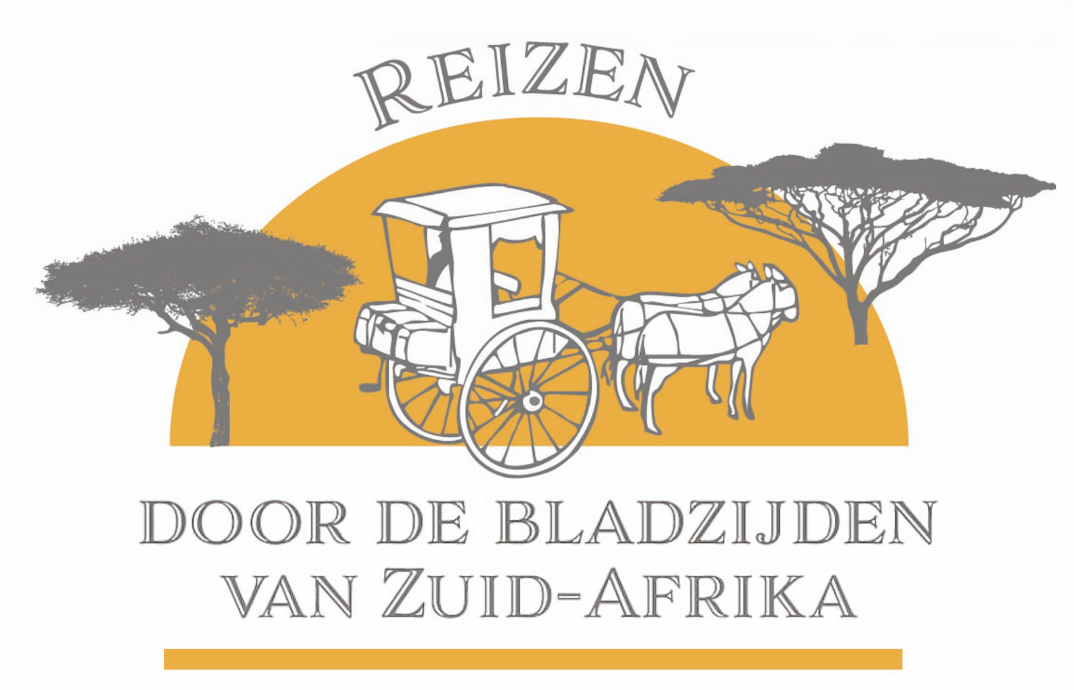
The Netherlands has been an important node in the travelling networks between Europe and South Africa from the 17th century onwards. As a result, it holds large parts of the archive described above. This volume invites authors to select and compare at least two items (objects/artefacts) drawn from two institutions that contain relevant collections: the Zuid-Afrikahuis in Amsterdam and the Wereldmuseum. Both these heritage centres hold a large number of travelogues written by European travellers in Southern Africa, and objects from Southern Africa sent to Europe by them, recently explored in the book exhibition, Reizen – door de bladzijden van Zuid-Afrika. Authors may also select a third item from another collection, if it is relevant to their project.
We are particularly interested in the biography of objects and artefacts, including but not limited to travelogues, as a methodology: what meaning did these artefacts carry in their place of origin, what meanings were assigned to them as they travelled to European collections, and what meanings become available when they are examined critically today? And what becomes apparent when we become attentive to what is not in the archive, but implied or gestured at by the object?
The objective of this project is to provide a critical, essayistic reflection on the act of travelling to and in Southern Africa, by being sensitive to and critical of the power hierarchies that are often reproduced in the archives. Consequently, we encourage authors to go beyond a mere description of the travelling records they focus on, but also to think about the meaning and the ideas behind them. We approach the provenance of objects not only as a question of historical reconstruction in order to learn more about how objects came from Southern Africa to Europe, but as a means of ethical inquiry: what forms of knowledge, reparation, or restitution (broadly understood to include the restoration of dignity, narrative and memory) does critical engagement with these collections make possible and maybe even necessary?
We are inviting proposals for essayistic contributions of around 2500- 3000 words. Proposals for such essays should be submitted as an abstract of no more than 250 words before 1 december by email to j.j.v.kuitenbrouwer@uva.nl, m.c.van.der.waal@rug.nl and francois.jansevanrensburg@wereldmuseum.nl.
For queries about the collections, please feel free to contact the Zuid-Afrikahuis (Rosalie Dols at dols@zuidafrikahuis.nl, and/or Vincent Kuitenbrouwer at j.j.v.kuitenbrouwer@uva.nl) and the Wereldmuseum (François Janse van Rensburg at francois.jansevanrensburg@wereldmuseum.nl).
Final essays should be between 2500 – 3000 words (10% more or less) including a bibliography and footnotes.
Please keep the inclusion of appropriate visual material for your text in mind: the artefact you discuss should be clearly illustrated. As a guideline we would like to include 2-3 images per contribution.
The Publication
The contributions selected for this publication will be published in the SZAHN series as volume 4. The SZAHN series is an open-access publication published by the Stichting Zuid-Afrikahuis Nederland (Amsterdam). The series is dedicated to critical, interdisciplinary reflection on Southern African heritage as it is held in Dutch collections and institutions, and in particular, the collections held by the Zuid-Afrikahuis itself. In each volume, artefacts in the collection of the Zuid-Afrikahuis are taken as a point of departure to examine the historical entanglements between Southern Africa and the Netherlands as well as Europe more broadly. The aim is to open up our understanding of these entanglements to new perspectives. The series is edited by an editorial board with expertise in language and culture, history, memory studies, and postcolonial thought.
Contributors to the series are scholars, heritage practitioners, artists, journalists, and cultural workers from and beyond the established networks of the Zuid-Afrikahuis. Previous volumes in the series can be found here: https://www.zuidafrikahuis.nl/evenementen/publicaties/.