Episode 1 of Reflection(s): Reflecting critically on The ZAH past, present and future
More information on the series
In the past decades, debates on archives and archival material have thoroughly evolved. Traditionally, archives were considered as ‘objective’, detached repository of data. Whether these archives carried institutional documents, press articles, personal correspondences, photographs, artefacts, or all the above, these were widely perceived as neutral material which, as such, deserved to be preserved and cared for.
It is only in the late 1960s and early 1970s that feminist, post-colonial and critical theory scholarship started questioning this status-quo.
[1] They opened two fundamental (intertwined) pathways. First, one for understanding that archives, like other institutionalized spaces (and perhaps even more), are
permeated by power dynamics and biases that must be scrutinized. Second, one for raising the question of
archival absences, of considering the archives’ gaps and exclusions. Where are the absentees? And more importantly, why are they absent from the archives?
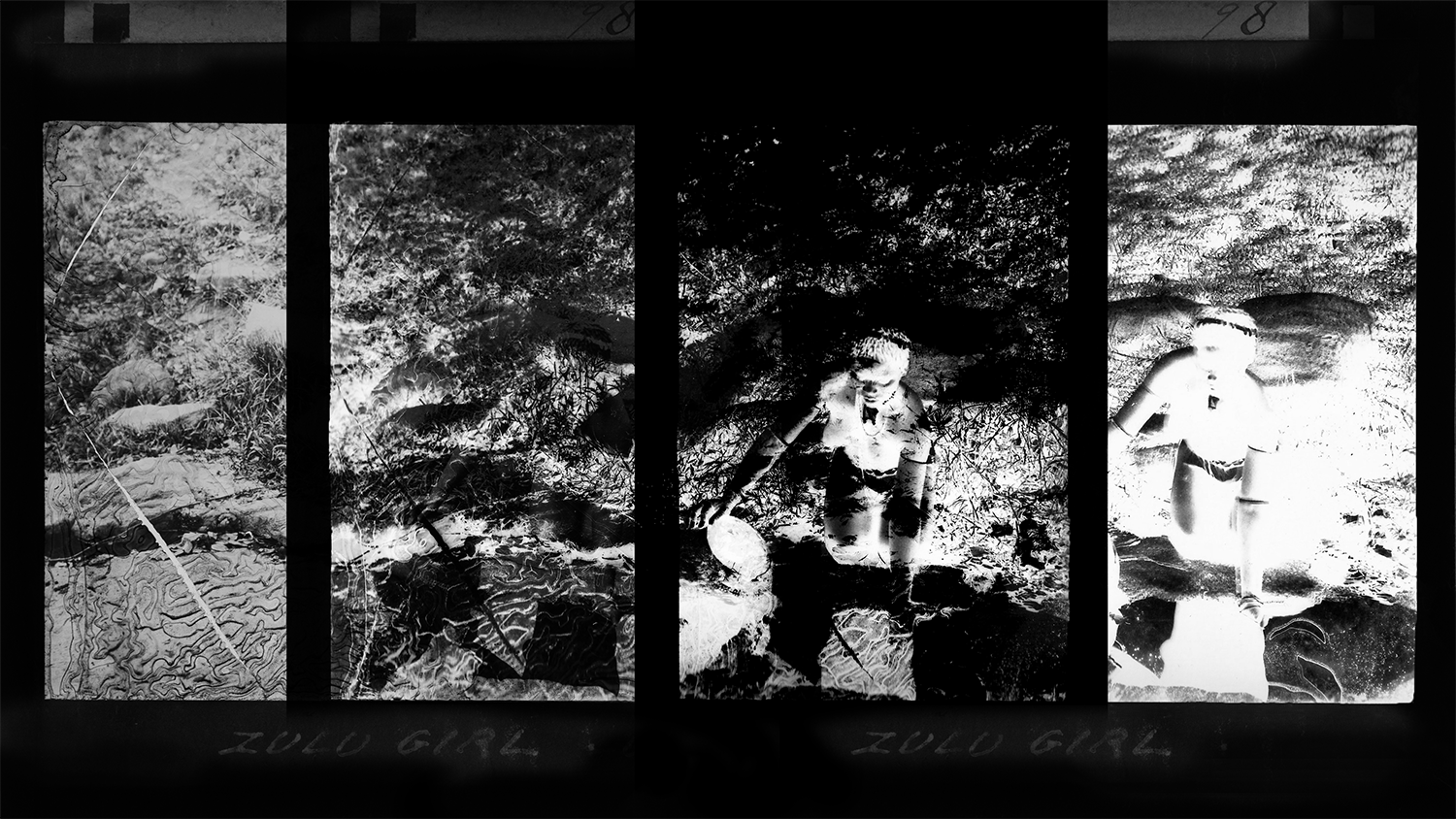
The Zuid-Afrikahuis holds a colonial archive. Its collection gathers numbers of administrative documents, personal exchanges and photographs dating from the late 19
th century to the mid-20
th century, all tied to South Africa. As Sana Tannoury-Karam puts it, “the colonial archive suffers from systemic and targeted erasure of records in order to ensure the creation of a sanitized narrative of the colonial encounter” (
2022).
If we were to pay attention to the ZAH’s archives deafening silences, what would we end up hearing?
In the first episode of the Reflection(s): reflecting critically on ZAH past, present and future, we want to dive deep into this question and more.
In conversation with our guests, we will seek to consider
archival material and
colonial archives differently, seeing the objects that compose it as “active, generative substances with histories, as documents with itineraries of their own” (Stoler, 2010, p.18)
[2]. We will consider our archives’ silences and their underlying root-causes. We will also explore such concepts as “archival imaginaries” (Caswell, 2014), “radical empathy” (Caswell & Cifor, 2016) and the role of affect(s) to help us re-think our archives and their futures.
[Sara] Ahmed calls on us as archivists, scholars and persons implicated in complex power relations to witness and to do the difficult work of negotiating collective narratives of pain, past and present, in the archives and far beyond it. (Cifor, 2016, p.22).
The speakers:
Jumoke Sanwo is a lens-based storyteller, place-maker, and cultural producer working within both 2D and 3D realms. Her artistic and curatorial interventions are centered around the intersection of technology, innovation, materiality, and art. She delves into the spatial and temporal experiences of both individuals and collectives, shedding light on the profound impact of colonial systems within postcolonial societies.
Through mediums such as photography, video art, and virtual reality film, she navigates the intricate terrain of postcolonial realism. Her work engages with bodily, spatial, and temporal imaginaries and memory to challenge binary perspectives.
Her artistic, curatorial, and cultural productions have garnered recognition at various international venues, including the Studio Museum in Harlem-New York, the New Museum-New York, the 56th Venice Biennale in Italy, the International Documentary Film Festival (IDFA) in Amsterdam, the Brunei Gallery in London, the Koppel Project Hive in London and the Revolving Art Incubator, Lagos amongst many others.
She lives and works out of Lagos, Nigeria.
Stacey Links a South African Inernational Relations (IR) researcher that has been based in the Netherlands for the past 13 years. Her work into the broad banner of South-South cooperation within International Relations, but importantly the geopolitical consequences of this engagement for traditional IR. Central to her work is a consideration for alternative frameworks and narratives of IR, notably taking a postcolonial and discursive lens to understand contemporary IR.
Carine Zaayman is an artist, curator and scholar committed to critical engagement with colonial archives and collections, specifically those holding strands of Khoekhoe pasts. Her work focuses on the afterlives of slavery and colonialism, particularly in the Cape, by bringing intangible and neglected histories into view. Her research aims to contribute to a radical reconsideration of colonial archives and museum collections, especially by assisting in finding ways to release their hold over our imaginations when we narrate the past, as well as how we might shape futures from it. At present, Carine works as a researcher and research co-ordinator in the Research Centre for Material Culture, Wereldmuseum in the Netherlands.
Rozé Mettler is from South Africa, born in Queenstown (Komani) Eastern Cape, but raised in Bloemfontein Free State. She graduated from the University of the Free State in 2022 with Honors in Anthropology, specialising in cultural anthropology.
She extensively worked with the community in Heidedal Bloemfontein, Free State, and participated in intercultural exchanges at the university. She is passionate about South African heritage and exploring narratives that are not always mainstream, empowering marginalised communities through engaging with heritage. She is completing a Master’s in Museum and Heritage studies in the Netherlands. Her focus has been exploring the relationship between South Africa and the Netherlands.
References:
Caswell, M .(2014). Toward a survivor-centered approach to records documenting human rights abuse: lessons from community archives.
Archival Science, 14(3–4) pp. 307–322.
Caswell, M., Cifor, M. (2016). From human rights to feminist ethics: radical empathy in the archives.
Archivaria, 81, pp. 23–43.
Cifor M (2016). Affecting relations: introducing affect theory to archival discourse.
Archival Science. 16(1), p.7–31.
Stoler, A. L. (2010).
Along the Archival Grain: Epistemic Anxieties and Colonial Common Sense. Princeton: Princeton University Press.
Tannoury-Karam, S. (2022).
Reimagining the Archival Body: Towards a Feminist Approach to the Archive. Jeem.
https://jeem.me/en/authority/1142
[1] For early work, see: Foucault, M. (1972).
The Archaeology of Knowledge. New York:Pantheon; Derrida, J. (1996),
Archive Fever. Chicago: Chicago University Press; Said, E. (1993).
Culture and Imperialism. New-York: Knopf.
[2] More extensively, Stoler writes: “In these chapters Dutch colonial archival documents serve less as stories for a colonial history than as active, generative substances with histories, as documents with itineraries of their own. What was written in prescribed form and in the archive’s margins, what was written oblique to official prescriptions and on the ragged edges of protocol produced the administrative apparatus as it opened to a space that extended beyond it. Contrapuntal intrusions emanated from outside the corridors of governance but they also erupted—and were centrally located—within that sequestered space. Against the sober formulaics of officialese, these archives register the febrile movements of persons off balance – of thoughts and feelings in and out of place. In tone and temper they convey the rough interior ridges of governance and disruptions to the deceptive clarity of its mandates.” (2010, pp.18-19).